

Do Whoodles Make Good Family Dogs? A Real-World Perspective
If you’re looking into Whoodles, you’ve probably read a lot of conflicting information.
One website says they’re extremely energetic. Another says they’re calm. Some people describe them as stubborn. Others say they’re incredibly easy to train.
After raising and working with Whoodles for years, I’ve found that the truth is usually somewhere in the middle.
Like people, every dog is an individual. But there are definitely some patterns that show up again and again in this breed. If someone asks me what it’s really like to live with a Whoodle, this is what I tell them.
A Great Balance of Playful and Relaxed
One of my favorite things about Whoodles is that they tend to have an “off switch.”
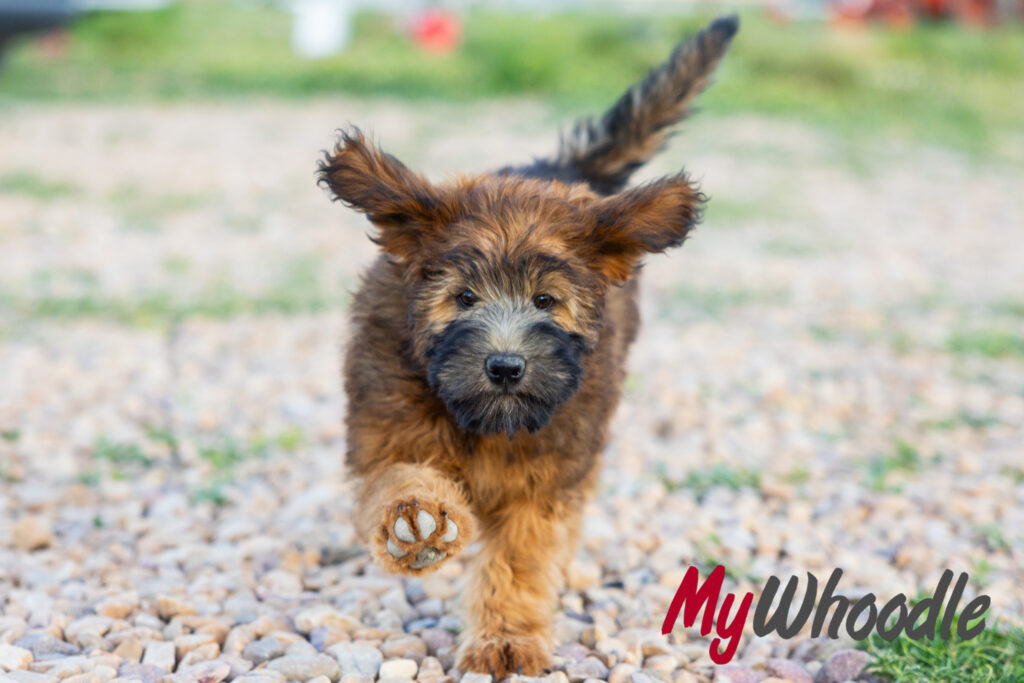
They love to play. They love to run. Many of them get the famous puppy zoomies and can be absolutely hilarious to watch.
But they are also perfectly happy curling up on the couch with their family at the end of the day.
I think this balance is one of the reasons so many families fall in love with them. They’re active enough to join you on adventures but not so intense that they require constant activity every waking moment.
Most of the Whoodles I’ve known fit comfortably in the middle. They’re neither couch potatoes nor endurance athletes. They simply want to be involved in whatever their people are doing.
Are Whoodles Easy to Train?
Generally speaking, yes.
Their Poodle heritage gives them a high level of intelligence, and most Whoodles genuinely enjoy learning.
That doesn’t mean training happens automatically. It still takes consistency and patience. But compared to many breeds, they tend to catch on quickly.
One thing I’ve noticed is that Whoodles respond especially well when training is treated as a game rather than a chore. Short, positive training sessions can accomplish a tremendous amount.
The first few months are particularly important. A puppy that learns basic manners, confidence, and routines early in life often becomes an exceptionally easy dog to live with as an adult.

Some Puppies Need Time to Find Their Confidence
One misconception people have is that every puppy should arrive bold, outgoing, and ready to conquer the world.
That isn’t always reality.
I’ve seen puppies that were naturally cautious or a little timid when they were young. Some people worry when they see this, assuming it will define the dog’s entire future.
In many cases, it doesn’t.
With patience, structure, positive experiences, and time, some of those puppies have grown into incredibly confident adult dogs.
In fact, a few of the most affectionate and devoted Whoodles I’ve ever known started out as some of the quieter puppies in their litter.
That’s one reason I always encourage new owners to focus less on who their puppy is on day one and more on who they’re helping that puppy become.
Do Whoodles Do Well With Families?
In my experience, they do exceptionally well.
They tend to be affectionate without being overwhelming. They enjoy being part of family activities and often form strong bonds with both adults and children.
What I like most is their adaptability.
A Whoodle can spend the morning hiking a trail, the afternoon playing in the backyard with the kids, and the evening sleeping at your feet while you watch television.
That versatility makes them a good fit for a surprisingly wide variety of homes.
Families with Children
Many Whoodles thrive in family environments because they enjoy interaction and activity.
Active Couples or Singles
They make wonderful companions for people who enjoy outdoor adventures but don’t necessarily want a dog that requires constant exercise.
Retirees and Empty Nesters
As long as they’re given appropriate exercise and mental stimulation, many Whoodles settle beautifully into quieter households as well.

[Insert image of a Whoodle with a family]
The Biggest Myth About Whoodles
If I could correct one misconception, it would probably be the idea that Whoodles are wildly hyper dogs.
Can some individuals be energetic? Absolutely.
Can puppies be chaotic at times? Of course.
But most mature Whoodles I’ve known are remarkably balanced.
They’re playful when it’s time to play.
They’re relaxed when it’s time to relax.
That combination is actually one of the breed’s greatest strengths.
The First Few Weeks Matter More Than Most People Realize
When a puppy goes to a new home, everything is changing.
- New people.
- New smells.
- New routines.
- New expectations.
Because of that, I always encourage owners to focus on creating consistency during those first few weeks.
Simple routines help puppies feel secure. Predictable schedules help them understand what’s expected. Patience helps them build confidence.
Many new owners expect a puppy to settle in immediately. Most puppies need time.
Giving them that time often pays off tremendously in the long run.

Building a Strong Bond Without Creating Separation Anxiety
One philosophy I share with almost every puppy family is this:
Spend time with your puppy, but don’t make them dependent on you.
Training is one of the best bonding activities you can do together. It creates communication, trust, and mutual understanding.
At the same time, puppies should learn that it’s okay to be alone occasionally. They should learn to rest independently and feel secure without constant attention.
When owners find that balance, they often end up with a dog that is both deeply bonded and emotionally stable.
Final Thoughts
After years of raising Whoodles, the word I keep coming back to is balanced.
They’re intelligent without being overwhelming.
They’re playful without being exhausting.
They’re affectionate without being clingy.
Most importantly, they genuinely enjoy being part of family life.
No breed is perfect for everyone, but for many households, a well bred and properly raised Whoodle can be an outstanding companion for years to come.
And that’s why so many of our puppy families tell us the same thing after bringing one home:
“We can’t imagine life without them.”